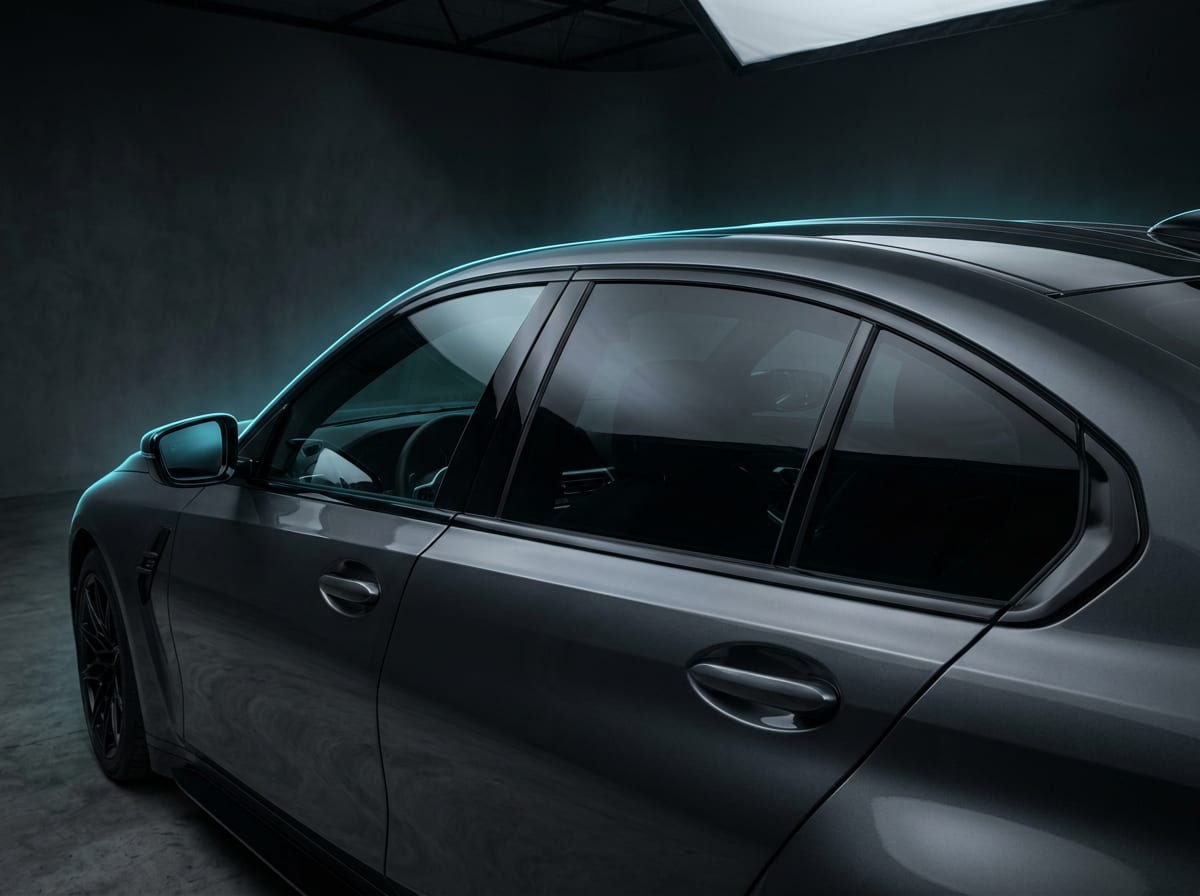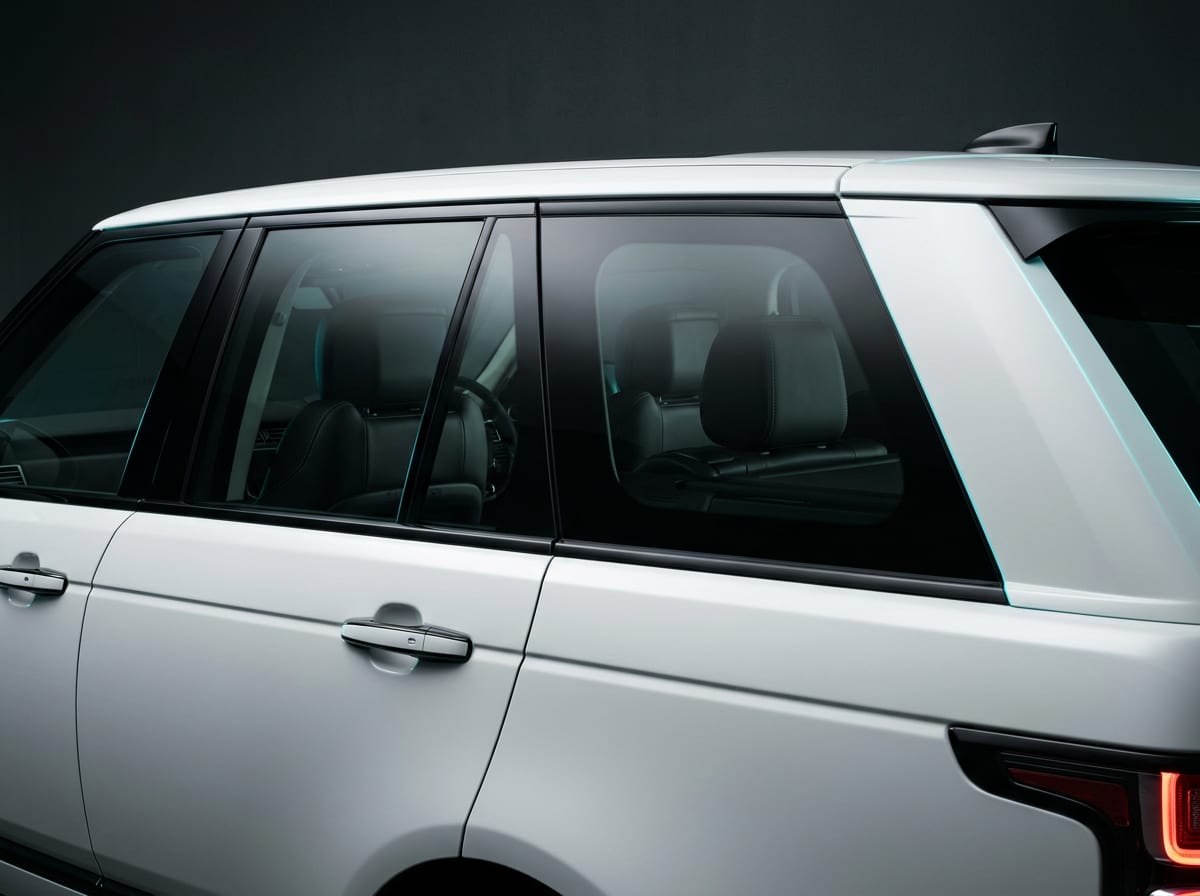
Evolution · Ceramic Window Film
XP ceramic film absorbs solar energy before it reaches the cabin. Up to 81% of total solar energy is rejected and 68% of infrared energy across the full 780–2500nm band.
XP series
- Up to 81% total solar energy rejected
- 68% infrared energy rejection
- Metal-free: no signal interference
- Low-reflectance, factory-glass look
- Technology
- Nano-ceramic
- Shades
- 5–70 VLT
- Max IR rejection
- 83%
- Max solar rejected
- 81%
- Thickness
- 2 mil
- Warranty
- Lifetime, transferable
Shade lab
Selected shade: XP 35
Drag through every shade in the XP range. Every gauge, chart and comparison on this page updates to match.

Visible light transmitted35%
Clear glass 87%Darker by 52 pts
Spectral performance
Move across the chart, or focus it and use the arrow keys, to read values by wavelength. UV and IR show rejection; visible light shows transmission. The curve between measured points is illustrative.
Where the sun goes
Total solar energy hitting the glass, split into what the film reflects, absorbs and lets through.
- Reflected
- 7%
- Absorbed by film
- 83%
- Transmitted
- 10%
Across the range
Select a shade to load it everywhere on this page.
- Visible light (VLT)
- Solar energy rejected
- Peak IR rejection
Head to head
XP 35 vs CX 35
- 35%Visible light35%
- 74%Solar energy rejected45%
- 82%Peak IR rejection60%
- 99%UV rejection99%
Compared at the closest available shade in the CX range.
| Film | VLT | Visible reflected | Solar transmitted | Solar reflected | Solar absorbed | TSER | IR rej. 940–1400nm | Glare reduction | UV rejection | IRER 780–2500nm |
|---|---|---|---|---|---|---|---|---|---|---|
| XP 5 | 5% | 6% | 4% | 6% | 90% | 81% | 83% | 92% | 99% | 68% |
| XP 15 | 15% | 6% | 5% | 7% | 88% | 79% | 82% | 82% | 99% | 68% |
| XP 35 | 35% | 7% | 10% | 7% | 83% | 74% | 82% | 61% | 99% | 68% |
| XP 50 | 50% | 7% | 14% | 7% | 79% | 67% | 81% | 44% | 99% | 68% |
| XP 70 | 75% | 9% | 30% | 7% | 63% | 49% | 79% | 25% | 99% | 68% |
All XP films are 2 mil thick with a lifetime transferable warranty. Values are based on independent test results; check local tint laws before choosing a shade.